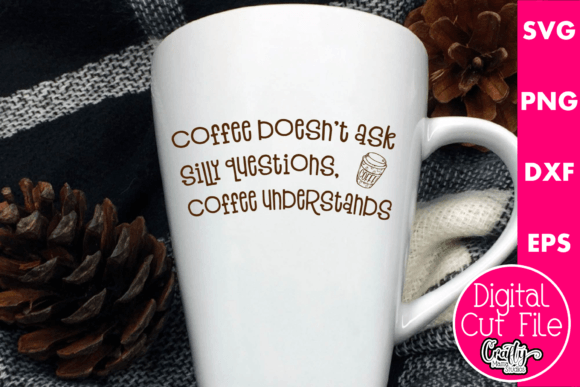
Coffee Doesn t Ask Silly Questions Graphics for Crafts
I recently pulled Coffee Doesn t Ask Silly Questions into my design workspace to evaluate it for a real-world branding project. My client is a local artisanal bakery that specializes in sourdough and morning pastries, and they needed a fresh visual element to elevate their product labels and social media presence. As an experienced brand designer, I do not simply look at a file; I analyze its potential to build trust, create recognition, and drive sales. This graphic design asset immediately caught my eye because it strikes a balance between playful charm and professional clarity.
The first impression of this design is one of warmth and relatability. It suggests a brand personality that is friendly, approachable, and unpretentious. For a local business, especially in the food or handmade sector, this mood is invaluable. It feels organic and slightly rustic, yet modern enough to stand out on a crowded shelf. When I placed Coffee Doesn t Ask Silly Questions next to a clean sans-serif font, the combination felt cohesive. The quote itself acts as a conversation starter, creating an emotional connection with customers who appreciate a good cup of coffee before the day begins. It is not just a decoration; it is a statement of brand values.
Strategic Applications for Local Business Branding
In the context of a small business, every pixel counts. This digital product download includes SVG, EPS, DXF, and PNG formats, which makes it incredibly versatile for various marketing visuals. I envision using this asset prominently on product labels for our pastry boxes. A simple black-and-white print of this design on kraft paper packaging would instantly communicate a handmade ethos. It serves as a perfect decorative brand element that reinforces the story of the bakery without overwhelming the essential information.
Beyond physical packaging, this illustration is ideal for social media graphics. In the age of Instagram and Pinterest, visual hierarchy is crucial. Coffee Doesn t Ask Silly Questions can serve as a hero graphic for promotional ads or a seasonal campaign visual. Imagine a flyer for a weekend special where this text anchors the layout, drawing the eye before the customer reads the price or time. It works equally well as a sticker on thank-you cards included in orders, adding a touch of personality that encourages repeat business. For a boutique owner or a candle brand, these design assets can transform generic materials into a polished brand identity.
Elevating Product Presentation and Shelf Appeal
One of the primary goals of commercial design is to improve shelf appeal. When a customer picks up a jar of homemade soap or a bag of roasted beans, they are looking for cues of quality. Using Coffee Doesn t Ask Silly Questions as a central visual anchor helps establish stronger first impressions. It signals that the business cares about the details. By integrating this funny coffee svg into the overall visual language, we create a more consistent brand identity that builds customer trust over time.
This asset also supports better product recognition. If used consistently across menu graphics, price lists, and business cards, the phrase becomes associated with the specific business. Over time, customers will recognize the tone and style even without seeing the logo. For a florist or a home decor shop, this kind of consistent visual storytelling is what separates a hobby from a professional enterprise. The inclusion of high-resolution PNG files ensures that the transparency remains crisp when layering the design over different background colors or textures.
Navigating Design Constraints and Best Practices
While this graphic is powerful, a seasoned designer knows that placement matters. There are specific scenarios where Coffee Doesn t Ask Silly Questions should be used carefully. For instance, if you are designing for a formal corporate environment or a luxury minimalist brand, this playful tone might clash with the desired aesthetic. Similarly, on very small labels or ingredient-heavy layouts, the text could become illegible if not scaled correctly. Crowded product packaging requires a clean approach; ensure the decoration does not compete with important legal information or nutritional facts.
Low-contrast backgrounds are another pitfall to avoid. If the white text is placed on a light cream background, it may disappear. Always test the design against your actual color palette. Furthermore, while this is a fantastic clipart for creative projects, it may not fit the strict requirements of editorial design for high-end fashion magazines unless styled specifically for that context. The key is to let the design support the message, not distract from it.
Technical Evaluation and Commercial Readiness
Before finalizing any project, I always run a series of practical checks. First, I test the asset on real packaging mockups to see how it translates from screen to physical object. Does the line weight hold up? Is the curve of the lettering smooth? I also preview it on small labels to ensure readability. Checking the black and white usage is critical, as many businesses need monochrome versions for foil stamping or embossing.
The availability of multiple formats like SVG design and DXF files is a significant advantage. These allow for easy editability, meaning I can adjust the size or reshape elements without losing quality. However, it is vital to inspect the vector editability to ensure there are no hidden layers or complex paths that might cause issues during printing. I also compare the design with competitor packaging to ensure it offers something unique. Testing it beside serif fonts, script fonts, and handwritten styles helps determine the best typographic pairing for the final brand presentation.
Finally, confirming the commercial license is non-negotiable. Whether you are selling physical products or using these graphics for client work, you must have the rights to use Coffee Doesn t Ask Silly Questions commercially. This digital file download provides the flexibility needed for product sellers and marketers alike. From creating Canva templates for social media managers to designing custom stickers for handmade sellers, the utility of this asset is vast.
Final Thoughts on Creative Integration
In conclusion, Coffee Doesn t Ask Silly Questions is more than just a cute image; it is a strategic tool for small business branding. It brings a sense of humor and humanity to professional branding efforts, making it perfect for food businesses, skincare brands, and boutique stores. By understanding where it fits and how to integrate it thoughtfully, designers can create marketing visuals that resonate deeply with local audiences. Whether you are launching a new product line or refreshing your existing brand identity, this graphic design asset offers the polish and personality needed to succeed in today's competitive market.